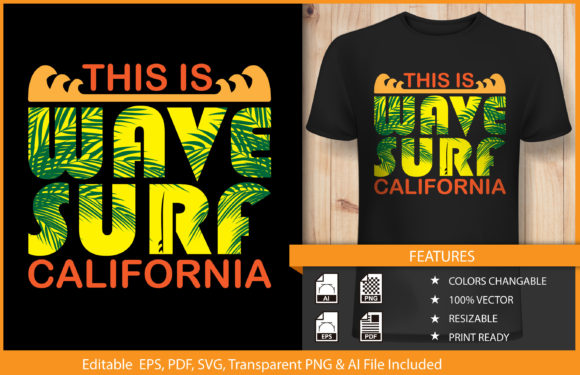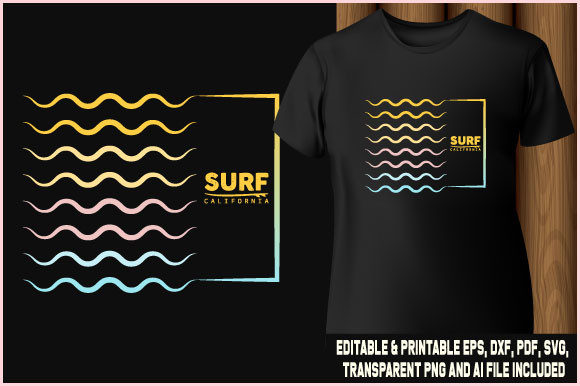
T-shirt Design Surf California Vector: An Embroidery Review
When I first opened the T-shirt Design Surf California Vector file, my immediate thought was not about how it would look on a screen, but how it would translate under the needle. As an embroidery product reviewer and designer, I have learned that a beautiful vector illustration does not always guarantee a successful stitch-out. This specific design captures a vibrant, retro-coastal mood that is incredibly popular right now, but its complexity requires a strategic approach for anyone planning to use it in real-world production.
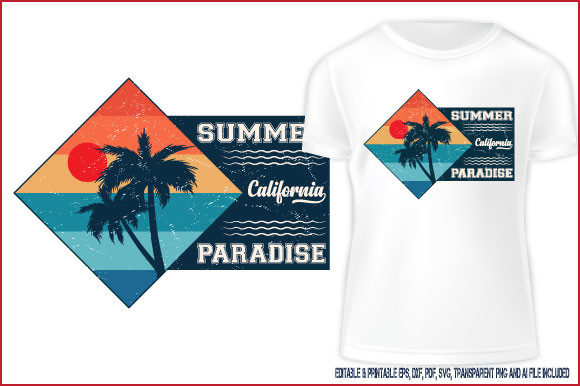
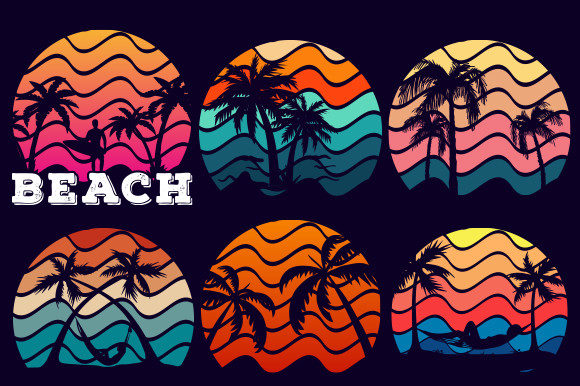
The visual personality of this graphic is bold and energetic. It features dynamic shapes and colorful elements set against a black background, which suggests high contrast and strong visual impact. For Etsy sellers and small shop product creators, this aesthetic is gold because it photographs well in listings. However, moving from a digital embroidery file to a tangible handmade product involves navigating the physical limitations of thread and fabric. My review focuses entirely on bridging that gap, ensuring your finished project maintains the integrity of the original artwork while surviving the rigors of wear and washing.
Real-World Application: The Custom Tote Bag Test
To truly evaluate the T-shirt Design Surf California Vector, I mentally placed it into a current client scenario: creating a premium canvas tote bag for a coastal boutique’s summer merchandise line. Tote bags are a staple embroidery project because they offer a flat, stable surface, yet they present unique challenges regarding density and drape.
In this scenario, the design serves as the centerpiece. The colorful nature of the vector implies multiple thread colors and potential color changes. When stitching this onto natural canvas, the vibrancy of the threads must pop against the fabric texture. If the design relies heavily on solid fills to mimic the vector's opaque areas, the resulting embroidery could become stiff and bulletproof. A heavy, dense stitch area on a tote bag can cause the fabric to pucker or lose its natural flexibility. As a professional, I would assess whether sections of this design could be converted to an applique design or open fill stitches to reduce density while maintaining the colorful surf aesthetic. This adjustment is crucial for customer comfort and perceived quality.
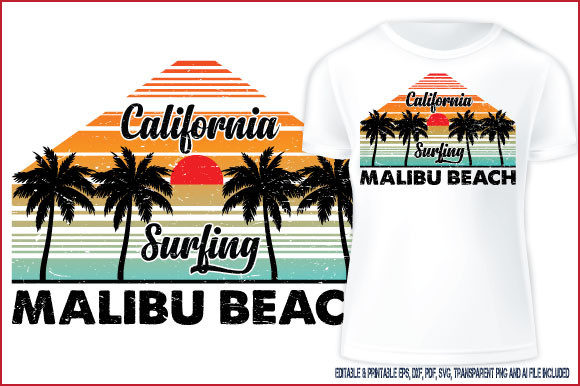
Furthermore, the "California" theme often involves script typography or detailed wave lines. In a real-life stitch-out, these fine details are where problems arise. If the vector contains thin lines meant for printing, they may disappear or break when stitched as a running stitch. Conversely, if they are auto-digitized into thick satin columns, they might distort the lettering. For a boutique product, clarity is non-negotiable. Customers trust brands that deliver crisp, professional results, so verifying that the text remains legible at the intended size is a mandatory step before bulk production.
Navigating Fabric Limitations and Hoop Constraints
While the product description highlights readiness for POD and various items like mugs and pillows, embroidery demands stricter parameters. The T-shirt Design Surf California Vector likely has a specific aspect ratio optimized for apparel fronts. When adapting this for different substrates, you must consider the hoop size and fabric stability.
- Stretchy Fabrics: If applying this to a lightweight t-shirt or performance wear, the design’s density becomes a critical factor. Heavy vectors on thin knits lead to tunneling. You will need a robust stabilizer strategy, potentially using two layers of cutaway backing, to support the stitch count without warping the garment.
- Textured Surfaces: For items like tea towels or linen pillow covers, the fabric texture competes with the design. Fine details in the surf illustration may get lost in the weave. In these cases, increasing the underlay or simplifying small elements ensures the design reads clearly from a distance.
- Curved Items: Using this on caps or curved sleeves requires caution. Vectors designed for flat printing often do not account for the distortion that occurs on a cylindrical hoop. You may need to resize or reposition elements of the T-shirt Design Surf California Vector to prevent gaps or misalignment in the final custom apparel.
I also advise extreme care when working with dark fabrics. Since the source art is on a black background, it likely uses light or bright thread colors. On black fabric, this works beautifully. However, if you attempt to stitch this on white or pastel fabric without adjusting the digitizing, you risk seeing dark underlay shadows through lighter top threads. Always test on scrap fabric that matches your final project material to verify opacity and coverage.
Commercial Viability and Professional Presentation
For creative entrepreneurs and craft business owners, time is money. The value of this graphic lies in its versatility across T-Shirt Designs and other Graphics categories. However, commercial success depends on consistency. If you are selling personalized gifts or holiday merchandise, every unit must look identical to the listing photos.
Visual appeal directly influences buyer engagement. A poorly executed embroidery job devalues the entire brand. When reviewing this design for commercial use, I look at the balance between artistic flair and technical feasibility. Does the design allow for efficient color sequencing? Excessive jumps and trims slow down production and increase the risk of thread breaks. A well-digitized version of this surf vector should optimize the stitch path, making it viable for both single custom orders and batch production runs.
Additionally, consider the licensing and usage rights. Before listing any finished product derived from this asset, confirm whether the license permits commercial embroidery sales versus just digital printing. Protecting your business means respecting intellectual property and ensuring your customers receive legitimate, high-quality goods. This due diligence builds long-term trust and professionalism in the handmade marketplace.
Essential Pre-Stitch Checklist for Makers
Before you load the digital embroidery file into your machine, run through this practical checklist to avoid costly mistakes. These steps apply whether you are making a baby embroidery item, a patch, or a full-back jacket design.
- Verify Dimensions: Check the actual stitch dimensions against your hoop. Do not assume the vector size equals the safe embroidery size. Resizing in software can alter stitch density; always recalculate after scaling.
- Test Stitch-Out: Never skip this step. Use the exact fabric and stabilizer combination intended for the final project. Inspect registration, especially where different color blocks meet.
- Contrast Check: View the design in black and white within your software to identify value separation. Ensure distinct elements do not blend together visually once stitched.
- Mockup Validation: Create a printable mockup or digital preview to show clients. This manages expectations regarding texture and sheen, which differ significantly from flat vector art.
- Wash Test: If producing commercial embroidery for apparel, wash and dry the test sample. This reveals if the stabilizer holds up and if the design distorts after laundering.
The T-shirt Design Surf California Vector offers immense creative potential for makers who respect the medium. By approaching it with a critical eye toward stitch mechanics rather than just visual style, you transform a digital asset into a premium, sellable product. Whether you are crafting a unique sweatshirt embroidery piece or building a cohesive collection for your shop, practical judgment is what separates amateur attempts from professional mastery. Take the time to understand the design's behavior, and your needle will do the rest.